Status & feedback
Signals stored against this version for ranking.
Status
Signal for future ranking.
Analysis
Evaluation
A topologically ambitious chain-reaction puzzle where the graph network itself is the progression system, but the concept's complexity and rendering demands make it a difficult prototype target without significant scoping.
Clarity52
higher is better
Novelty78
higher is better
Buildability38
higher is better
Retention potential62
higher is better
Ad testability71
higher is better
Visual distinctiveness80
higher is better
Clone risk18
lower is better
Strengths
- Genuine structural innovation: topology-as-progression-record is a mechanically distinct idea — failure degrades graph connectivity rather than filling a tile grid, which is a meaningfully different pressure model.
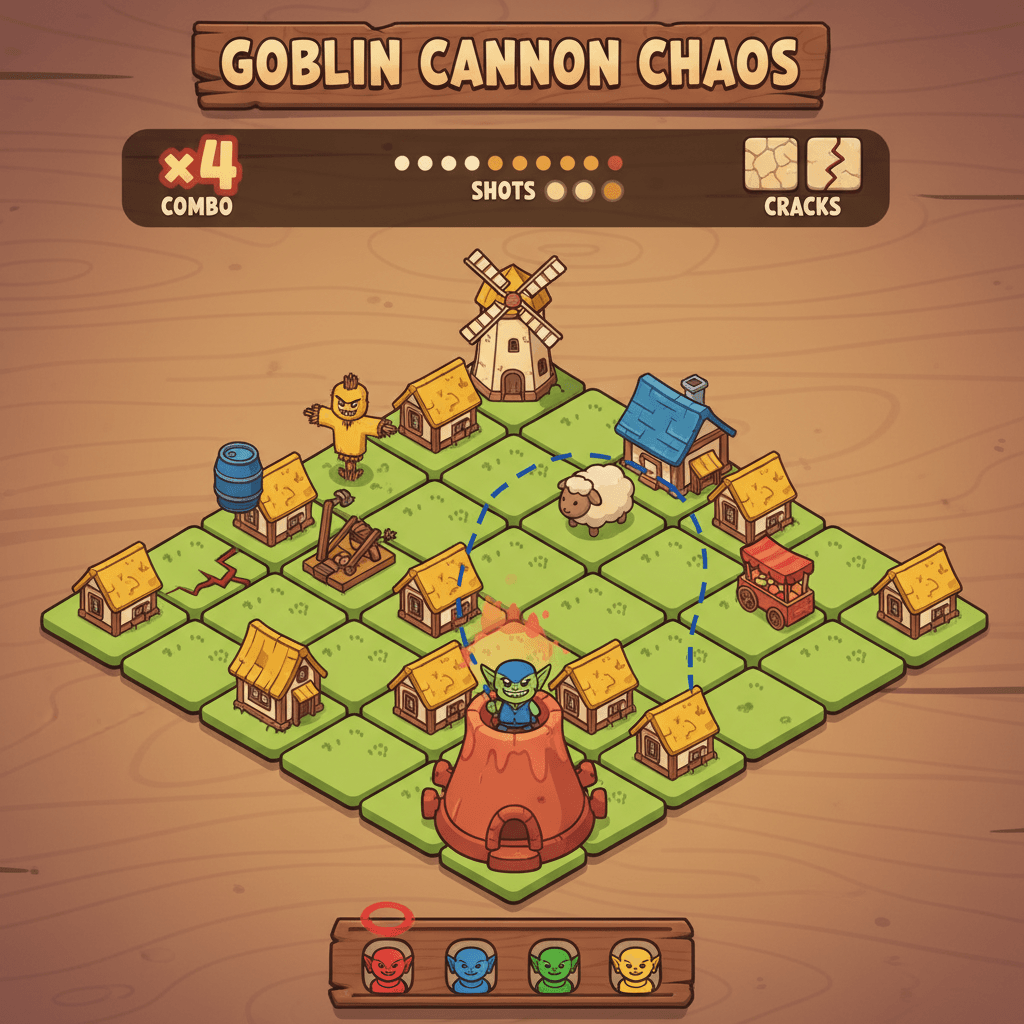
- Visual identity is strong and coherent — warm cottage aesthetic, yarn/thread language, sneezing goblins — the cozy framing naturally communicates the path-network metaphor without requiring players to understand graph theory.
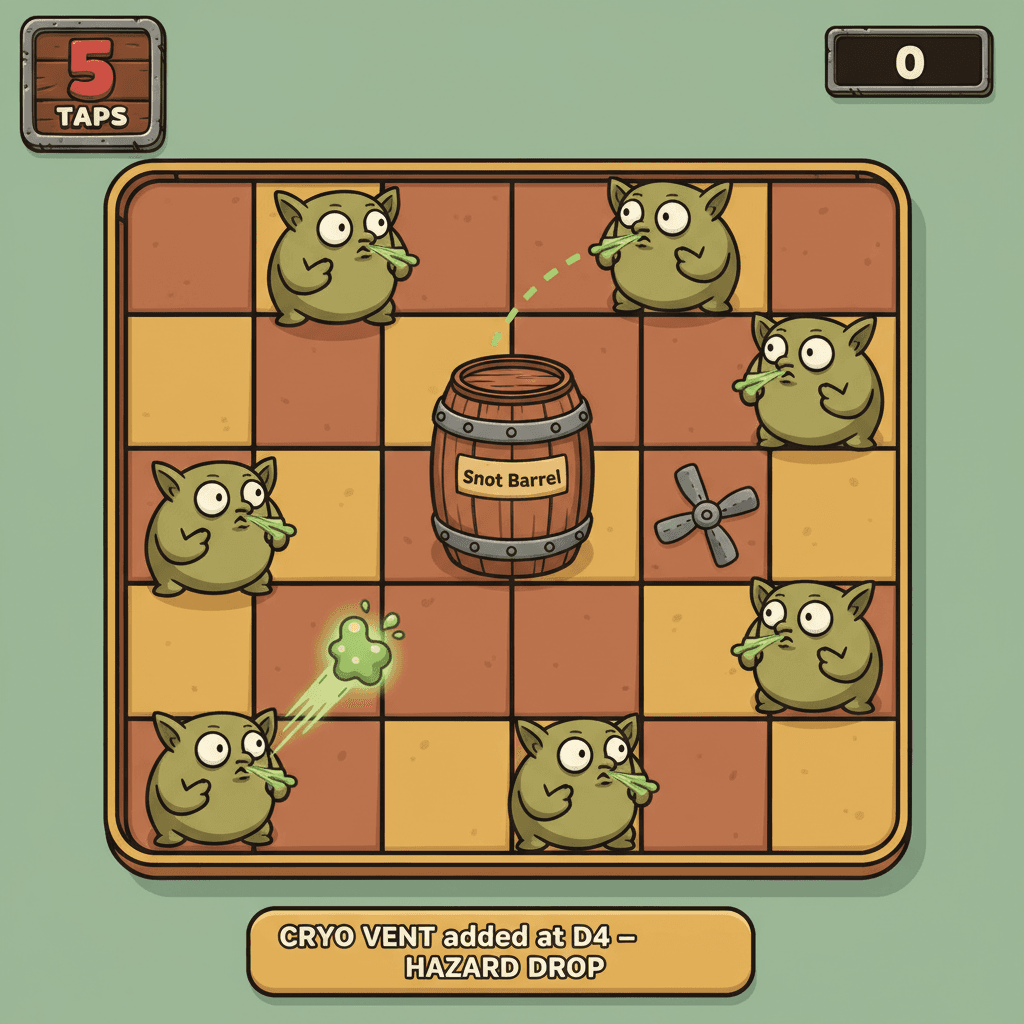
- Ad hooks are well-constructed: the tug counter panic clip and the topology split-screen (Round 1 vs Round 14) are genuinely capturable moments with clear cause-and-effect payoffs.
- Low clone risk — no direct market analogue combines dynamic graph topology mutation with a move-limited chain-reaction mechanic in this aesthetic register.
Risks
- Buildability is the critical blocker: dynamic path-network graph rendering with animated yarn-ball traversal, junction state management, Tangle Knot accumulation, and Frayed Thread snap effects at 60fps is a substantial engineering scope for a prototype — the concept is described at production depth, not prototype depth.
- Readability gap: players trained on tile grids will not intuitively understand that yarn-balls travel along thread edges rather than in straight lines — the onboarding burden is high and the failure mode (misreading the network) is invisible until it causes a Tangle Knot.
- The safe-play exploit (isolated thread tugs producing guaranteed 1-goblin chains with zero reroute risk) is correctly identified but the proposed fix (minimum reroute floor) is a band-aid that doesn't address the underlying incentive misalignment — players who discover this will feel punished for understanding the system.
- Thread Reroute announcements ('THREAD C3→F3 now reroutes through peg E4') add coordinate-label cognitive load that conflicts directly with the cozy, low-friction aesthetic — the UI language is at war with the visual register.
Originality
Decision: allow · Score: 72
The path-network graph topology as the primary progression and failure system — where edges are rerouted rather than tiles blocked, and where the layout is a structural record of player decisions — constitutes a substantial differentiator in the foundational mechanical layer not present in any identified comparable; the cozy aesthetic and chain-reaction surface resemblances to Peggle do not override this structural distinction.
Material differences
- The core mechanic replaces a static tile grid with a dynamic path-network graph whose edges and vertices are permanently restructured each round based on which chains the player completed — this is a topological progression system rather than a hazard-tile accumulation system, meaning failure degrades graph connectivity rather than blocking discrete cells.
- Yarn-balls are constrained to travel along named thread edges between junction pegs rather than flying in free-form straight lines or along cardinal grid directions, making chain geometry entirely dependent on the current graph structure and producing a layout that is a topological record of the player's prior decisions.
- The Tangle Knot failure state severs graph edges rather than occupying tiles, so the punishment is a reduction in network connectivity (potentially splitting the graph into disconnected sub-graphs) rather than a reduction in available play space — this is a structurally distinct pressure model from hazard-tile accumulation games.
- The Wool Barrel split mechanic triggers two Thread Reroutes that cluster adjacent pegs, meaning aggressive barrel-routing players produce a qualitatively different network topology (dense, high-intersection sub-regions) compared to conservative players (sparse, long unobstructed runs), creating divergent strategic identities from the same ruleset.
Closest comparables
Peggle (Popcap, 2007) — projectile-along-path chain resolution with peg-based junctions and a limited shot budgetYarntown / yarn-physics puzzle games (general genre) — wool/thread aesthetic with path-following projectile logic
Context
Mockup
Single-image slot. Generate a concept board above for the full family.
gemini / gemini-2.5-flash-image
Sources
No source anchors (random mode).
Version history (2)
Similar concepts
Semantic neighbours by embedding — useful for spotting overlap.